
Understanding the Challenge of Large Projects
The Psychology Behind Procrastination
Large projects often trigger procrastination because they present an overwhelming amount of work. This feeling of overwhelm can paralyze motivation, making it difficult to even start. Executive dysfunction—commonly experienced in conditions such as stress, ADHD, autism, depression, or anxiety—further complicates this by impairing the ability to identify the necessary steps and sequence them effectively. When the brain struggles to prioritize or make decisions, it often opts for avoidance instead.
Perfectionism also fuels procrastination. The fear of making mistakes or not performing perfectly can keep you from taking the first step altogether. This creates a cycle where tasks are delayed due to self-doubt and negative self-talk, such as believing “I can’t get this done” or “I’m not good at planning.” The larger the project, the greater the perceived enormity, which can result in mental paralysis and increased self-defeating thoughts.
Common Obstacles in Managing Large Tasks
Many people face several obstacles when trying to manage large projects. One common mistake is jumping into work without clearly knowing the real first step, which leads to confusion and stalls progress. Sometimes, the initial steps are overestimated in complexity, or essential preliminary steps are skipped. Task avoidance, fueled by boredom or the misconception that breaking down tasks is less productive, prevents progress.
Others may fail to set realistic milestones or allocate specific time for each smaller task, resulting in poor time management. Waiting to “feel ready” instead of taking immediate action is another obstacle, as readiness often comes from starting rather than preplanning. Understanding these barriers is crucial to overcoming procrastination and creating effective strategies for work.
Step-by-Step Approach to Task Breakdown
Identifying Major Project Milestones
The first step to managing a large project is to identify its major milestones. These milestones are significant points or phases in the project that mark progress and provide a clearer horizon within the bigger picture. Pinpointing these helps avoid feeling lost in a mountain of vague tasks. It’s important to clarify the overall objective before breaking it down to ensure each milestone aligns with the final goal.
By establishing these benchmarks, you create a structured roadmap, making it easier to focus on one phase at a time instead of an overwhelming whole. This approach reduces mental paralysis and grounds your work in achievable targets.
Dividing Milestones into Actionable Tasks

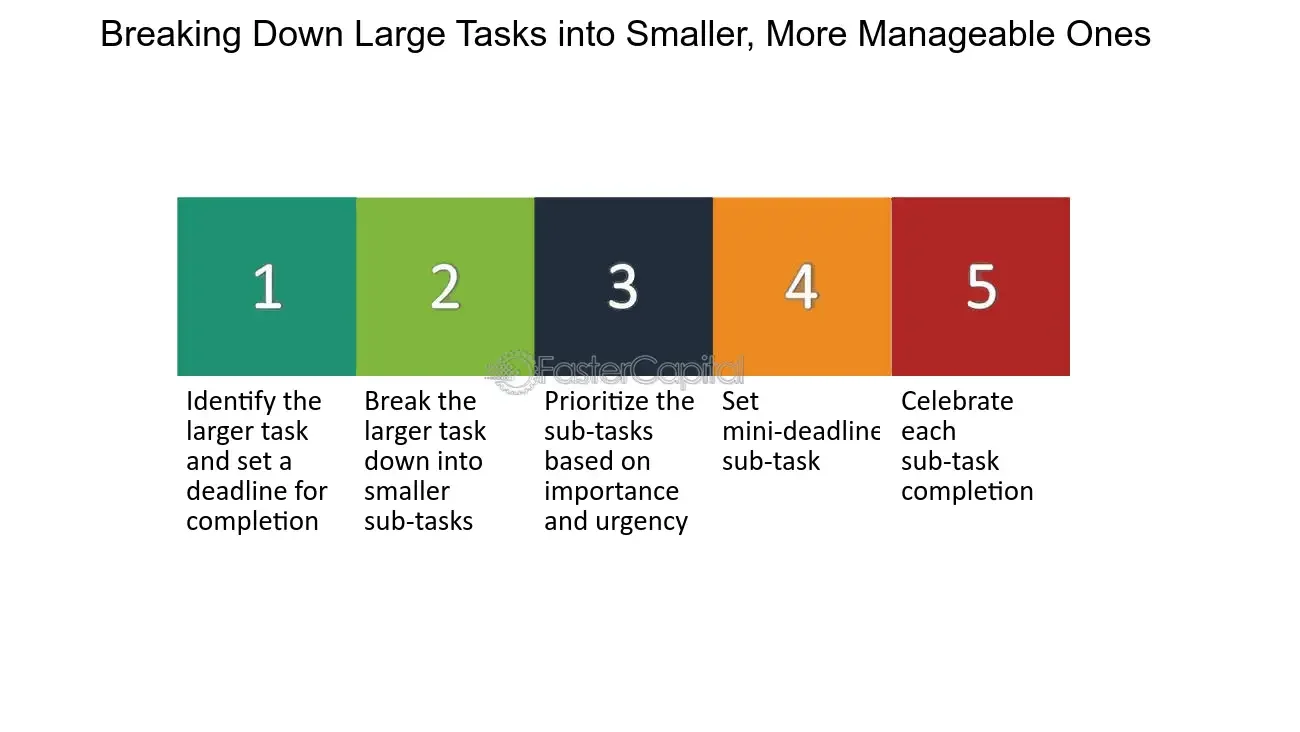
Once the major milestones are set, the next challenge is to divide them into smaller, actionable tasks. This chunking process transforms giant tasks into manageable steps that seem less daunting. The key is to identify the true first step of each milestone, which avoids common errors like starting in the wrong place or overestimating task size.
Practical strategies such as the Brain Dump can help at this stage. Writing down every possible step without worrying about order frees your mind from clutter and uncovers the detailed path forward. Pairing this breakdown with SMART (Specific, Measurable, Achievable, Relevant, Time-bound) goals sharpens focus and improves executive function. Smaller tasks become milestones themselves, fostering a sense of progress and reducing procrastination triggers.
Setting Realistic Deadlines for Each Task
Large projects often lack clear timelines, which can exacerbate procrastination. To solve this, estimate how long each smaller task will take and set realistic deadlines. Time estimation can be refined by timing yourself during initial steps, improving accuracy over time.
Allocating specific time blocks to each task on your calendar or planner ensures that work fits into your daily routine—an essential element to avoid overcommitment and burnout. When deadlines are too ambitious, tasks become stressful; if they are too loose, procrastination can creep back in. Balanced, achievable deadlines ensure steady momentum while maintaining motivation.
Tools and Techniques to Simplify Task Management
Using Project Management Software
Project management tools provide visual organization, helping to break down projects into tasks and milestones clearly. Software like Trello, Asana, or Microsoft Planner allows you to list, sequence, and monitor progress, which is especially helpful for complex or collaborative work.
These tools often support features like notifications, deadlines, and time tracking, reducing cognitive load and helping maintain focus. Many also let you map tasks onto calendars, facilitating the integration of the STM framework—Steps, Sequence, Time, and Mapping. Using software can eliminate the distraction caused by mental clutter and make project management feel less overwhelming.
Employing Time-Blocking and Prioritization Methods
Time-blocking involves reserving specific periods in your daily schedule to work on defined tasks. This technique counters the habit of waiting to “feel ready” by creating commitment through planned action. Prioritization methods, such as the Eisenhower Matrix, help you identify which tasks require immediate attention and which can be deferred or delegated, preventing wasted effort on low-value activities.
Coupling prioritization with realistic time blocks anchors your day in focused work periods while balancing rest and flexibility. Time-blocking discourages multitasking and promotes deep work, enhancing productivity and reducing the likelihood of boredom or distraction during task execution.
Maintaining Motivation Throughout the Project
Celebrating Small Wins
One of the biggest challenges in long projects is staying motivated over time. Celebrating small wins—completing individual tasks or milestones—reinforces positive momentum. Recognizing these achievements builds confidence and combats self-defeating thoughts by affirming your progress and capability.
Rewarding yourself in small ways encourages consistency and fosters grit. This can range from brief breaks to personal treats, cultivating a healthy mindset where effort is acknowledged regardless of perfection. These positive reinforcements contribute to sustained engagement and reduce the risk of burnout.
Accountability Strategies to Stay on Track
Accountability maintains motivation by introducing external or internal checks on progress. Sharing your goals and timelines with a mentor, colleague, or friend provides encouragement and a sense of responsibility. Regular updates or check-ins can reduce the temptation to procrastinate, especially when combined with transparent task breakdowns and deadlines.
Self-accountability techniques, like using empowering self-talk phrases such as “I’ll do it anyway,” can also overcome resistance. This mindset shifts the focus toward taking responsibility for action, diminishing obstacles like negative thinking and perfectionism. Whether by external support or internal resolve, accountability keeps your project moving steadily forward.


