
Understanding Household Waste: The First Step to Sustainable Living
Types of Waste Generated at Home
Household waste comes in various forms, reflecting the daily activities and consumption habits of a family. It typically includes organic waste such as food scraps and yard trimmings, paper products like newspapers and packaging, plastics, glass, metals, and sometimes hazardous materials like batteries and cleaning chemicals. Recognizing these different types of waste is crucial because it determines how we manage and reduce them effectively. For example, organic waste can be composted, while plastics need to be sorted carefully for recycling.
The Environmental Impact of Household Waste
The environmental consequences of household waste extend far beyond what is visible in trash bins. Manufacturing, transporting, and disposing of goods generate significant greenhouse gas emissions — nearly 42% of these in the US come from these processes alone. Additionally, food waste decomposing in landfills produces methane, a gas much more harmful than carbon dioxide. Other materials, such as paper towels made from virgin timber and certain plastics, contribute to deforestation, pollution, and toxic chemical release, posing threats to wildlife and human health. Understanding these impacts highlights the need for sustainable living practices at home.
Simple Daily Habits to Minimize Waste
Smart Shopping: Choosing Sustainable Products
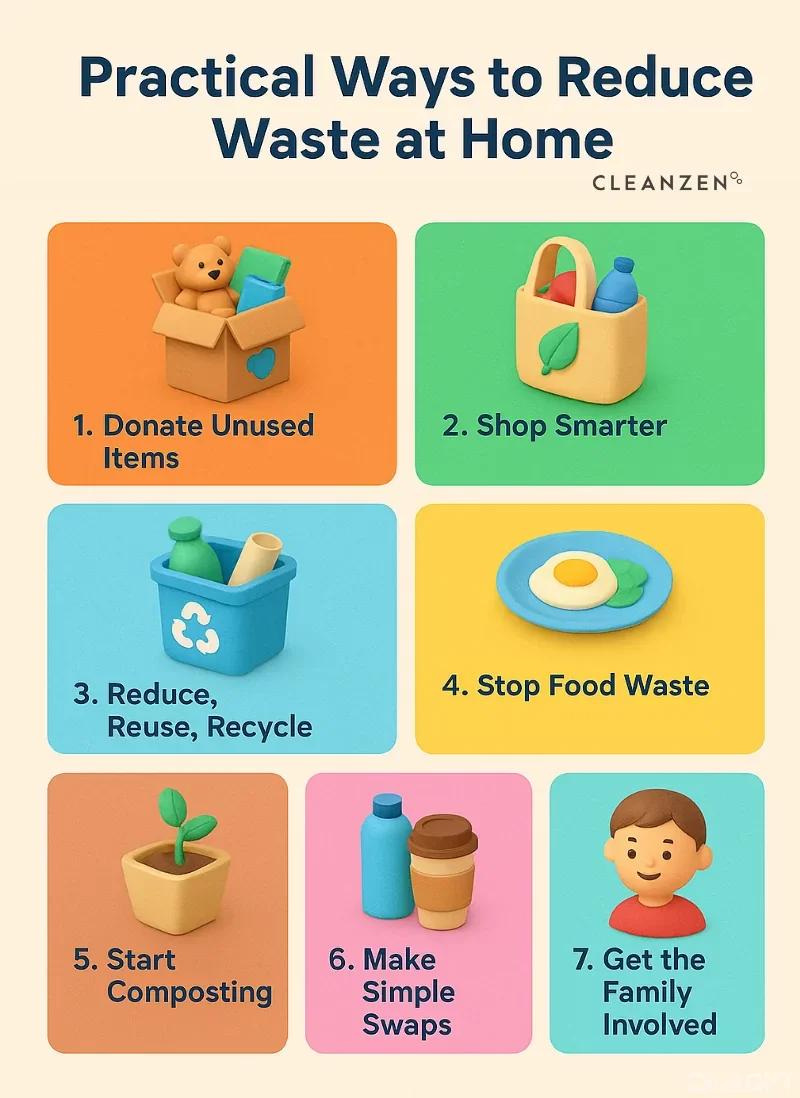
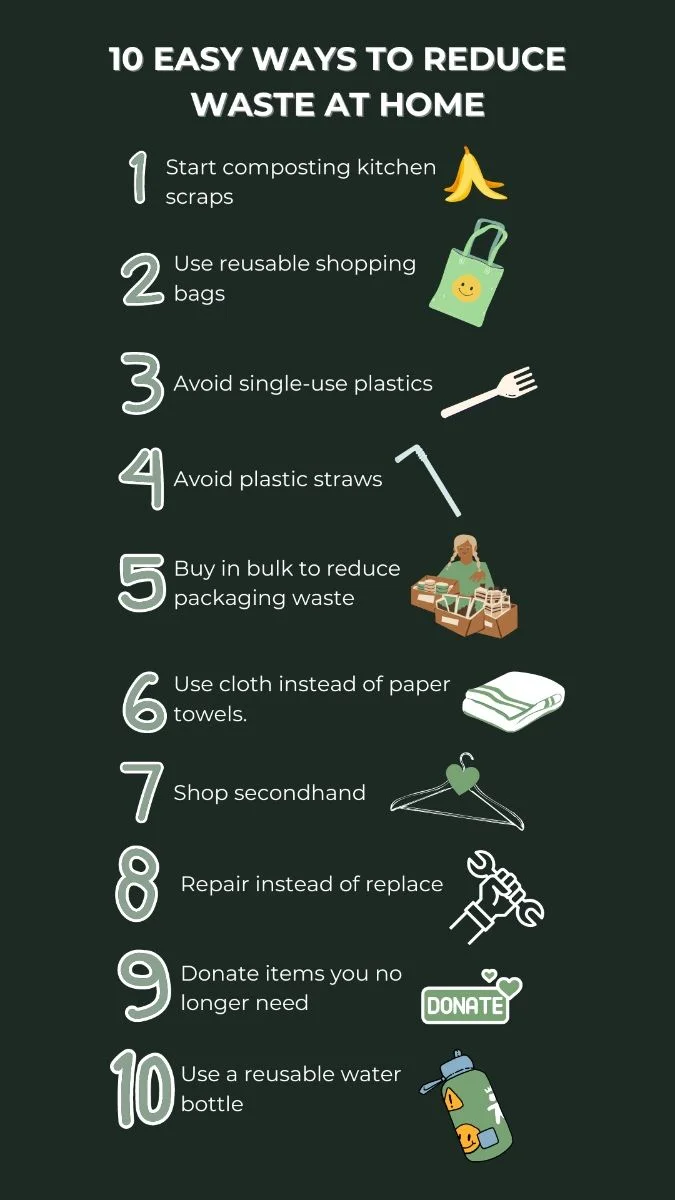
The journey to reducing household waste often begins at the store. Thoughtful purchasing decisions can minimize unnecessary waste before it even enters your home. Opting for products with minimal or recyclable packaging, especially those made from recycled materials, reduces the demand for virgin resources. Buying seasonal and regional produce not only supports local economies but also lowers carbon emissions related to transportation. Additionally, considering ethical production and fair working conditions encourages responsible consumption that respects both people and the planet.
Reducing Food Waste Through Planning and Storage
Food waste represents a large portion of household waste but can be significantly reduced with careful planning and storage. Creating a shopping list based on planned meals prevents impulse buying that often leads to excess food. Properly storing perishable items extends their freshness and usability, while repurposing leftovers transforms potential waste into delicious meals. Engaging with local food-sharing initiatives can also divert surplus food from landfills, fostering community ties and reducing environmental harm.
DIY Household Cleaners: Cutting Down on Chemical Waste
Many commercial cleaning products come in single-use plastic containers filled with ingredients that may harm the environment. Making simple, effective household cleaners at home — such as mixtures of vinegar, baking soda, and lemon — reduces chemical waste and packaging. This approach not only benefits the environment but also often leads to cost savings. Reusable cleaning tools like mops and cloth rags further complement these efforts by minimizing disposable waste.
Innovative Ways to Reuse and Repurpose Everyday Items
Creative Upcycling Projects
Before discarding items, consider how you might give them a second life through upcycling. Old furniture can be refreshed with paint, glass jars can become storage containers, and worn-out clothes can be transformed into cleaning rags or craft materials. Such creativity not only diverts waste from landfills but also adds unique, personalized touches to your home. Sharing ideas and projects with neighbors can inspire wider community participation in sustainability.
Turning Waste into Compost: A Beginner’s Guide
Composting is one of the most effective ways to reduce organic waste and improve soil health. Begin by collecting food scraps like vegetable peels, coffee grounds, and eggshells, along with yard waste such as grass clippings and leaves. Maintain a balance of green (nitrogen-rich) and brown (carbon-rich) materials, turn the pile regularly to encourage decomposition, and monitor moisture levels. Placing a compost bin in an easily accessible spot, such as under the kitchen sink, encourages daily use and faster results. Over time, this process produces nutrient-rich compost that supports gardens and reduces reliance on chemical fertilizers.
Implementing Effective Recycling Practices at Home
Sorting Waste Correctly
Proper waste sorting is essential to ensure that recyclable materials are not contaminated and can be processed effectively. Familiarize yourself with your local recycling guidelines, which often specify how to handle plastics, paper, metals, and glass. For example, rinsing containers to remove food residue and separating items by type prevents landfill diversion. Avoiding plastics numbered #3, #6, and #7 is advisable as they tend to leach harmful chemicals and are more difficult to recycle.
Finding Local Recycling Centers and Programs
Many communities offer specialized recycling programs for items that are not suitable for curbside pickup, including hazardous waste like batteries and electronics. Participating in these programs ensures that such materials are disposed of responsibly and reduces environmental pollution. Local centers may also provide opportunities to drop off reusable goods or participate in community collection events, supporting broader waste reduction goals.
Incorporating Sustainable Technology and Appliances
Energy-Efficient Devices and Their Benefits
Incorporating energy-efficient appliances can drastically reduce household energy consumption and carbon footprint. Devices certified by programs such as ENERGY STAR or EPEAT are designed to perform effectively while using less electricity. For example, air-drying clothes instead of using electric dryers cuts down on energy use and costs. Even small actions like turning off lights when not in use contribute to reducing overall demand for energy produced from fossil fuels.
Water Conservation Tools for a Greener Household
Water conservation is another critical aspect of sustainable living. Installing low-flow faucets, showerheads, and dual-flush toilets helps reduce water use substantially. Additionally, capturing rainwater for outdoor use and fixing leaks promptly prevents water wastage. These measures not only save a precious resource but also lower utility bills, creating an incentive for widespread adoption.
Community Engagement and Advocacy for Waste Reduction
Participating in Local Clean-Up Campaigns
Joining local clean-up events helps keep neighborhoods free of litter and raises awareness about waste issues. These activities foster a sense of community responsibility and often lead to stronger support for waste reduction policies. They also provide opportunities to learn practical tips from others actively engaged in sustainability efforts.
Educating Family and Neighbors on Sustainability
Sharing knowledge about sustainable living practices with family and neighbors amplifies the impact of individual efforts. Hosting workshops, distributing educational materials, or simply discussing daily habits and solutions encourages others to adopt waste reduction strategies. Fostering this culture of learning and collaboration creates a supportive environment where sustainable choices become the norm rather than the exception.


