
Understanding the Impact of Screen Time on Sleep
How Blue Light Affects Melatonin Production
Imagine Sarah, a young professional who enjoys unwinding with her favorite TV show on her tablet each night. What she might not realize is that the blue light emitted by her screen is interfering with her body’s natural melatonin production—a hormone crucial for regulating sleep. Blue light mimics daylight and signals the brain that it’s still daytime, leading to suppressed melatonin levels. This delay in melatonin release throws off the body’s internal clock, making it harder for Sarah to feel sleepy at a reasonable hour. As a result, she ends up tossing and turning, unable to drift off as easily as she would without screen exposure.
The Relationship Between Screen Time and Insomnia
Consider another example, Tom, who often scrolls through social media until late at night. The stimulating content keeps his mind active and alert, similar to caffeine but without the obvious buzz. His brain struggles to wind down, leading to prolonged wakefulness and difficulty falling asleep. Additionally, notifications and alerts from his phone frequently disrupt his attempts to rest, often waking him up throughout the night. This cycle of prolonged screen time and disrupted sleep can develop into chronic insomnia, where Tom struggles with persistent difficulty falling or staying asleep, reinforcing the link between excessive evening screen use and poor sleep quality.
Setting Realistic Goals to Minimize Screen Exposure
Assessing Your Current Screen Time Habits

Before jumping into changes, Lisa decided to honestly evaluate her screen use habits. She kept a simple diary for a week, noting down how much time she spent on her phone, laptop, and TV during the evening hours. She realized that much of her screen use was habitual, often without a clear purpose—checking emails, several rounds through social media, and streaming videos, often right until bedtime. This awareness helped her identify patterns, such as an average of two hours of screen time after dinner, which was likely contributing to her restless nights.
Creating a Personalized Screen Time Reduction Plan
With her assessment in hand, Lisa crafted a realistic plan to reduce her evening screen exposure gradually. She committed to shutting down devices 30 minutes earlier each night and introduced activities that didn’t involve screens, like reading a paper book or journaling. She also set specific screen-free zones, including her bedroom, and experimented with turning off notifications to avoid the temptation to check her phone. By tailoring her approach to her lifestyle, Lisa found the changes manageable and less overwhelming, which increased her chances of success.
Practical Techniques to Limit Screen Use Before Bed
Establishing Technology-Free Zones and Times
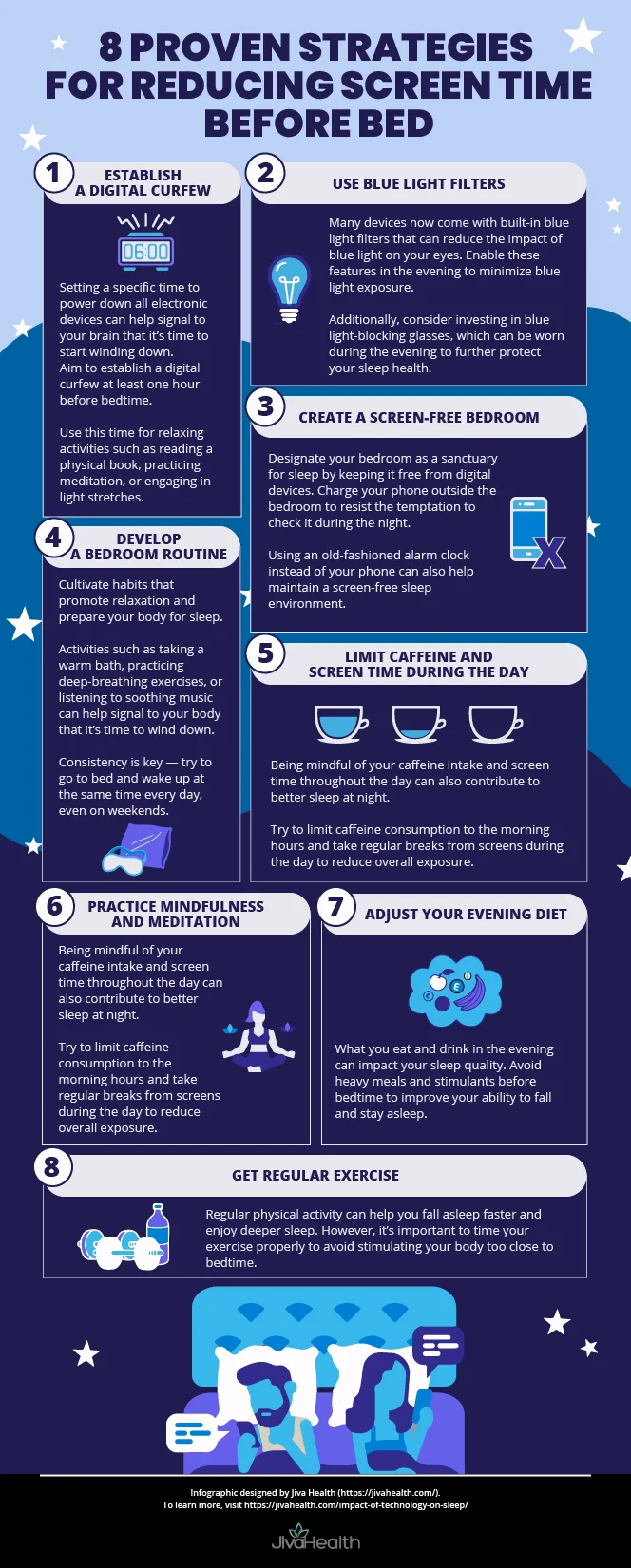
One successful strategy for Megan was creating clear boundaries around technology use at home. She declared the bedroom a no-screen zone and charged her phone in the kitchen overnight. This simple adjustment meant she wasn’t tempted to pick up her phone during the night or right before sleeping. Megan also established a household rule: no screens after 9 p.m. This gave her an hour to decompress without digital distractions, allowing her mind to relax and prepare for sleep. Families can find this technique especially effective when everyone buys into the plan together, supporting each other’s goals.
Utilizing Night Mode and Blue Light Filters Effectively
For those who need to use screens after sunset, like Carlos who works remotely, leveraging built-in blue light filters became an essential tool. He enabled night mode on his devices, which shifts the screen to warmer tones, reducing blue light exposure. This adjustment helped lessen the impact on his melatonin production, especially during crucial evening hours. Combining this with scheduled device downtime—where apps automatically limit notifications and usage—Carlos managed to avoid the most disruptive screen interactions and preserve his nighttime rest.
Incorporating Alternative Activities for Better Sleep
Relaxation Exercises and Mindfulness Practices
After work, Jane started integrating mindfulness exercises such as guided breathing and gentle stretching into her wind-down routine. Instead of scrolling on her phone, she spent 15 minutes focusing on her breath or listening to calming music, which lowered her stress levels and signaled to her body that it was time to sleep. These practices calm the nervous system, making it easier to transition from the busyness of the day to restful slumber. The routine not only helped reduce her screen time but also improved her overall feeling of relaxation.
Engaging in Offline Hobbies and Physical Activity
Mark found that trading screen time for engaging offline hobbies was particularly effective. He took up evening walks around his neighborhood and spent time on puzzles or reading. Physical activity helped burn off energy and increased his sleep drive, while low-stimulation hobbies gave his mind a break from screen-based engagement. These activities naturally replaced the time he might have spent on devices and created positive habits supporting better sleep.
Designing a Sleep-Conducive Environment
Optimizing Bedroom Lighting and Temperature
Creating the right environment can make a remarkable difference. Emily realized that her bedroom was too bright from LED lights and even streetlights outside, which disrupted her sleep cycle. She installed blackout curtains and used a dim nightlight instead of overhead lighting before bed. Additionally, she kept the room cool, around 65°F (18°C), which is widely considered optimal for sleep. These environmental tweaks helped signal to Emily’s body that it was time to rest, promoting deeper and uninterrupted sleep.
The Role of Comfortable Bedding and Minimal Distractions
Beyond lighting and temperature, having a comfortable bed plays a vital role. John invested in good-quality pillows and a mattress that suited his sleep style. He also removed TVs, laptops, and phones from his bedroom to eliminate distractions and the temptation to use screens. By pairing physical comfort with a clutter-free environment, John noticed that his ability to fall asleep quickly improved, and he woke feeling more refreshed.
Tracking Progress and Adjusting Strategies
Using Apps and Journals to Monitor Sleep Quality
Tracking progress was instrumental for Rachel, who used a simple journal to record bedtimes, wake times, and sleep quality each day. She also experimented with sleep-tracking apps to gather insights about her overall sleep patterns. This data helped her identify when she drifted back into late-night screen use and the effect it had on her rest. With this information, Rachel adjusted her approach, doubling down on screen-free routines and night mode usage, ultimately noticing significant improvements.
When to Seek Professional Help for Sleep Issues
While lifestyle changes can greatly enhance sleep quality, some individuals may still face persistent difficulties. If disrupted sleep continues despite consistent efforts to reduce screen time and improve routines, consulting a healthcare specialist or sleep expert can help identify underlying issues. Seeking professional guidance ensures that sleep problems are addressed comprehensively, and appropriate support is provided when needed. Recognizing when personal strategies aren’t enough is an important step towards better health.


